The Quiet Stretches: Planning a UK EV Road Trip Around Chargers That Actually Work
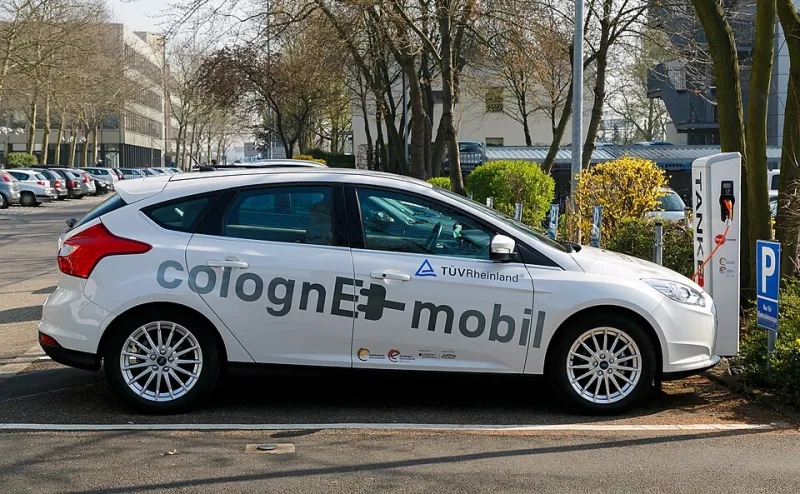
Photo: CEphoto, Uwe Aranas, CC BY-SA 3.0, via Wikimedia Commons
There is a comforting version of the UK EV road trip. You glide between motorway service areas, plug into a bank of shiny rapid chargers, drink an overpriced coffee and leave with 80 per cent. It can work. It is also only half the story. The moment your route turns off the M6 for the Lakes, heads into mid-Wales, or takes the slow road through North Yorkshire, the map gets thinner and the planning gets more interesting.
In 2026, the charging network is broader than it was a few years ago, but it is still uneven. Flagship motorway hubs are not the problem. The problem is the gap between them: the rural site with one CCS unit, the hotel charger that is apparently “available” until you arrive, the council car park where the app last had a good check-in in March. A good EV trip is not built on optimism. It is built on confirmed stops, sensible backups and an honest idea of what the car will really do with a roof box, a dog and a headwind.
Start With the Boring Bit: Your Real Range
Ignore the WLTP figure. It was never a holiday estimate. For a loaded UK trip, work from a realistic motorway efficiency figure — often somewhere around 3.2 to 3.8 miles per kWh for many modern EVs, less in winter or with a roof box. Then subtract the buffer you actually want to keep.
If your car has a usable 64 kWh battery and you leave home at 80 per cent, that is about 51 kWh to play with. At 3.3 miles per kWh, that is roughly 168 miles of theoretical range. Keep 20 per cent in reserve and your comfortable working leg is closer to 130 miles, not 220. That single adjustment will stop most route-planner fantasies before they start.
Treat Route Planners as Sketches, Not Gospel
Apps such as Zapmap and A Better Routeplanner are useful, but they are not live truth. A charger can be marked available while a driver is sitting on it, or marked offline when it has quietly been fixed. Use the planner to shape the route, then check the recent human evidence: check-ins from the last day or two, comments about payment, cable length, site access and whether the coffee van is still there.
Filter for the connector you actually need. CCS is the standard for rapid charging in the UK, while CHAdeMO is now a rarity on new cars but still lingers on some older units. For slower destination charging, Type 2 is your friend. Carry your own cable unless you know the site is tethered, and do not assume every “charger” is a rapid one. A 7 kW post outside a pub is lovely over lunch. It is not a rescue plan.
Where the Map Gets Thin
Rural gaps are the heart of the issue. Cornwall in August, the North York Moors, mid-Wales, the Highlands, parts of Norfolk and the quieter edges of the Cotswolds can all look reasonable on a screen and feel very different on the ground. The motorway corridor may be well served, but the last 40 miles to a cottage can be a charging desert with one overworked unit.
Look for clusters, not single points. A town with three separate charging locations is far more robust than one site with three bays. Destination charging is gold: hotels, pubs, farm shops, holiday cottages and council hubs. Phone ahead if you are relying on a rural charger, especially outside normal hours. Ask directly whether it is working, whether it is open to the public and whether you need an app, a card or a prayer.
If you are staying in a cottage, ask about charging before you book. A standard three-pin socket is not a proper EV charging solution for regular use, and extension leads should not be treated as holiday infrastructure. A dedicated outside socket or a commando-style outlet is much better. Get permission in writing if you are plugging into someone else’s supply, and offer to cover the electricity.
Build a Backup, Then Build Another
A workable rule is to know your next two options, not just your next charger. If the first site is full, broken or blocked by a van, you should already know where the second one is and whether you can reach it with your reserve intact. That might mean a 25-mile diversion to a reliable rapid, or a slower top-up at a destination charger that keeps you moving.
Connector reliability matters as much as charger count. A site with one CCS and one CHAdeMO is not a two-bay site for most drivers. A four-bay site where two units are down is a two-bay site. Check recent photos if you can. Payment is another weak point: carry a contactless card, set up the main apps and keep an RFID card if you have one. The charger that needs an account you have never heard of is the one you will meet at 9pm in the rain.
Weather, Load and the Holiday Tax
Cold weather, rain, headwinds and a roof box all take a bite. A fully loaded car with bikes on the back can lose 10 to 25 per cent of its range, and winter can do similar damage. Precondition the battery when you can, use seat and steering wheel heating rather than blasting the cabin, and accept that 70 mph is not the efficiency sweet spot.
Plan shorter legs in winter. Do not chase the last few per cent of range into a remote area. On rapid chargers, the 20 to 80 per cent window is usually the sensible one; the last 20 per cent is slow and often antisocial when someone is queuing. If you arrive at a busy hub, charge what you need and move on.
Costing the Route Honestly
Public rapid charging is not cheap. In 2026, many rapid sites sit somewhere around 70 to 85p per kWh, while destination and slower public charging can be closer to 30 to 55p. Home charging before you leave is still the bargain, so start full if you can.
Take a 600-mile holiday route. At 3.3 miles per kWh, that is about 182 kWh. If 60 per cent comes from rapids at 75p and 40 per cent from destination charging at 45p, the electricity comes to roughly £115. Add parking, idle fees, a subscription if you use one, and the possibility that your hotel charger is broken. Compare that with a petrol car doing 45 mpg over the same distance: about 61 litres at £1.45 a litre is around £88. The EV may still win on maintenance and home charging, but the holiday route itself is not automatically a saving. Put the numbers in a spreadsheet before you book, not after.
A Rhythm That Works
Stop every two to two and a half hours. Charge in the 20 to 80 per cent band. Eat, walk the dog, use the loo and let the car do its thing. Use motorway hubs as anchors when they suit, but do not build the whole trip around them. Plan the quiet stretches with the same care you would give a ferry booking.
A good UK EV road trip feels relaxed because the boring work was done earlier. Check the route on the morning you leave, have a backup within reach, and keep enough charge to change your mind. The chargers that actually work are usually the ones you checked, not the ones you hoped for.