The Extension Lead Illusion: What Your EV Can Really Keep Running in a Blackout
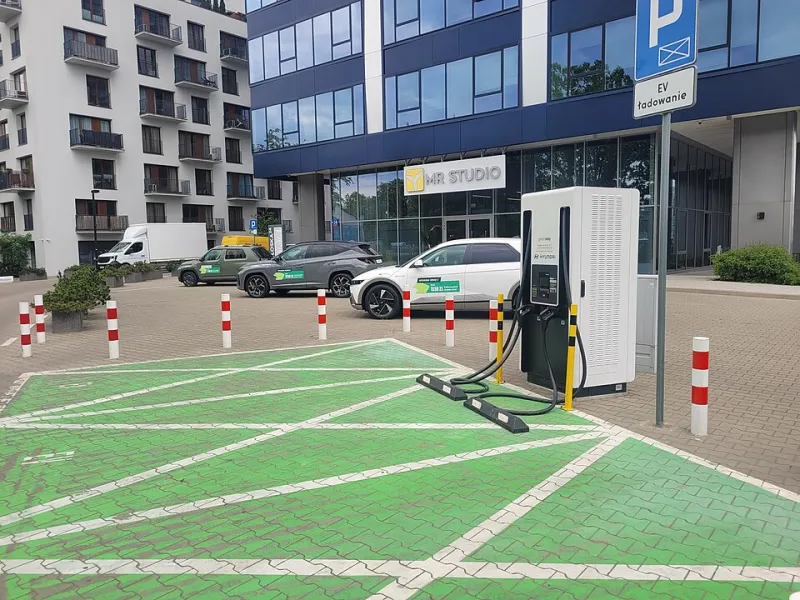
Photo: Wistula, CC BY-SA 4.0, via Wikimedia Commons
Storm season has a way of turning EV brochures into emergency planning documents. Every autumn, someone on a forum asks whether their car can run the fridge, the boiler and maybe the whole house when the grid goes down. The answer is a qualified yes, a firm no, and a surprisingly expensive maybe. In 2026, the gap between what a car can power and what a home needs is still wider than most forecourt posters admit.
The confusion usually comes from three different things being lumped together: vehicle-to-load, vehicle-to-home and generator-style marketing. They are not interchangeable. One is a rolling extension lead. One is a proper home-energy installation. And one is often a picture of a kettle next to a car with no mention of the transfer switch, earthing study or installer paperwork behind it.
First, separate the claims
Vehicle-to-load, or V2L, is the simplest. The car provides mains-style power through a dedicated socket or an adapter plugged into its charging port. Output is typically somewhere between 2.3kW and 3.6kW, depending on the model. That is enough for a few appliances, not a house. The supply is isolated from the grid, which is why you can use an extension lead from the car without backfeeding the street.
Vehicle-to-home, or V2H, is a different project. It uses a bidirectional charger and a changeover arrangement to supply selected circuits in the house. That means a transfer switch, an earthing assessment, a compliant installation and usually a notification to your distribution network operator. It is not a cable you buy on a whim and plug into the consumer unit.
The generator-style claims sit in the middle and cause most of the trouble. A car with a 3-pin socket is not a generator. It has no fuel tank, no pull cord and no automatic transfer switch. It can keep the lights on and the phone charged. It cannot quietly take over your ring main while you pretend nothing has happened.
What a V2L socket can actually carry
Start with a watt audit, not a wish list. A modern fridge-freezer might draw 100W to 200W while running, with a brief start-up spike. A router is 10W to 20W. A laptop is 50W to 90W. LED lights are single figures each. A television is around 100W. Add those together and you are still in the few-hundred-watt range, which is comfortably inside most V2L limits.
The problems arrive with heat. A kettle is around 3kW. An immersion heater is 3kW. An electric shower can be 8.5kW or more. An oven is 2kW to 3kW. A heat pump might pull 2kW to 6kW depending on the day and the setup. Even if the car's socket can technically deliver the number, running those loads for long periods is not the point of a backup supply. You will drain the traction battery faster than you expect and stress the adapter and leads.
A gas boiler is a common question. The pump and fan might only need 100W to 150W, but most boilers are wired into a fused spur rather than plugged into a 13A socket. Powering one from a car socket is not a DIY extension-lead job. It needs a qualified electrician and a proper changeover arrangement if it is going to be part of a backup plan.
For most households, the safe V2L list is boring: fridge, freezer, router, phone chargers, a few lamps, a laptop and perhaps a small television. Keep extension leads short, use an RCD adaptor, avoid daisy-chaining, and keep connections out of the wet. If the car is parked outside, think hard about how the cable enters the house. A lead trapped in a window is a compromise, not a permanent installation.
The kit list and what it costs in 2026
If your car already has a domestic socket, the entry cost is low. A heavy-duty 10m extension lead is roughly £40 to £80. A plug-in RCD adaptor is £20 to £30. A simple energy monitor is £25 to £40. A weatherproof connection box adds another £30 or so. That is a practical blackout kit for well under £200, provided you already own the car and its V2L adapter.
If the V2L adapter is not included, budget around £150 to £400 depending on the brand. Some manufacturers bundle it; others treat it as an accessory. Check the car's towing-style output rating before buying anything, and check whether the socket is a standard three-pin outlet or a dedicated connector that needs a specific cable.
V2H is where the numbers change character. A bidirectional wallbox and installation commonly lands somewhere around £4,500 to £8,000 in 2026, depending on the charger, the existing supply, cable runs and earthing work. If you want a dedicated backup consumer unit for selected circuits, add more. The car itself also has to support V2H, and not every model that advertises V2L can send power back into a house.
That is the key financial point for drivers without a dedicated home-energy setup: V2L is an accessory-sized purchase. V2H is a home-improvement project. Do not compare the two on the same spreadsheet.
Warranty, earthing and installer red flags
Warranty wording is worth reading before you plug anything in. Using a manufacturer-supplied V2L adapter for camping or a power cut is usually treated as normal use. Using an unapproved bidirectional charger, or wiring the car into the house through a homemade lead, is a different matter. Some battery warranties have clauses about excessive cycling or unauthorised power export. Ask the dealer for the specific wording rather than relying on a forum post.
Earthing is the other silent issue. A V2L socket is designed to supply appliances in isolation. A house has its own earthing arrangement, and a V2H system has to be integrated with it safely. An installer should assess whether the property is TN-C-S or TT, check the consumer unit, fit a proper changeover switch and ensure the system cannot feed back into the grid while lines are being repaired. In England and Wales, new circuits are notifiable work under Part P. The distribution network operator may also need to be told.
Red flags are easy to spot. Anyone offering to wire a car's V2L socket into your consumer unit through a 13A plug is not offering a shortcut; they are offering a backfeed risk. Anyone who cannot explain the difference between V2L and V2H is not the right person for the job. And anyone who promises whole-house backup without looking at your earthing, supply capacity and existing circuits is guessing.
A realistic blackout plan
For a flat or a house without a driveway, V2L still has a role. Charge the car before forecast storms. Keep a short, heavy-duty extension lead and an RCD adaptor indoors. Know the car's output limit and write down the wattage of the appliances you actually plan to run. Keep the fridge and freezer closed as much as possible, and use the car for a few hours at a time rather than trying to run the house continuously.
If you want whole-home backup, cost it as a home-energy project, not a car accessory. Get a qualified installer who has done V2H before, ask for the earthing and notification details in writing, and check the warranty position with the manufacturer. The technology is real. The marketing is often ahead of it. For most UK drivers, an EV is a useful emergency power source, not a replacement for a properly planned home backup system.