The Pavement Cable Pact: Charging, Courtesy and Cover Without a Driveway

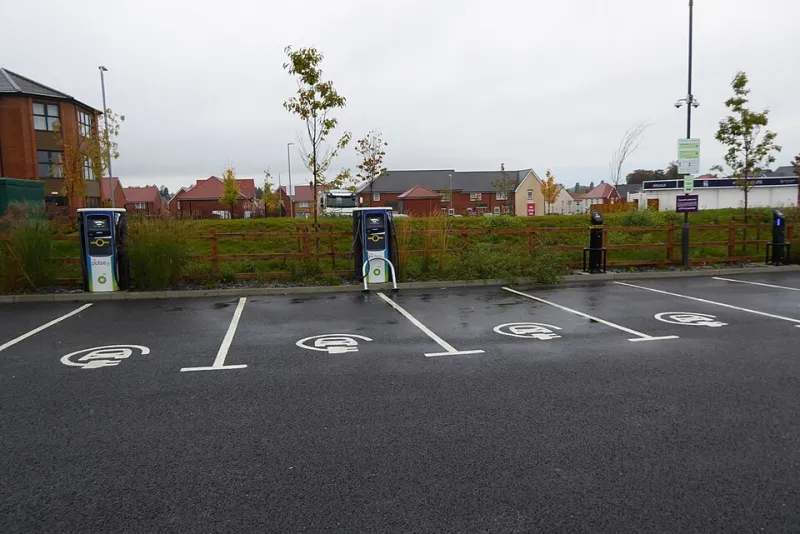
Photo: Danny Robinson, CC BY-SA 2.0, via Wikimedia Commons
Charging an electric car without a driveway has always involved a certain amount of improvisation. You park as close as you can, unreel the lead, lift the cable over the path and hope the whole arrangement looks more sensible in daylight than it does at 11pm. For plenty of UK drivers, it is the only practical way to get a decent charge at home. But the moment that cable crosses a pavement, a shared driveway or a bit of land nobody quite owns, you are not just managing electrons. You are managing risk.
Where the risk actually starts
A charging cable lying across a public pavement is, first and foremost, a trip hazard. It can also be an obstruction. In England and Wales, councils can point to highways legislation when deciding whether a cable across the footway is acceptable; in Scotland the framework is different again. The practical reality is that there is no single nationwide rule saying ‘yes, this is fine’ or ‘no, never’. Some local authorities have published guidance for kerbside charging. Others run trial schemes with cable channels or gully solutions. Plenty simply have no formal position until a complaint lands on a desk.
That uncertainty matters because liability tends to follow the facts, not the paperwork. If someone trips over your lead and breaks a wrist, the questions will include how the cable was laid, whether it was visible, how long it had been there and what you did to warn people. Your home insurer may become involved. So may the local authority. It is not a scenario anyone wants to test casually.
The council line is not one line
Before you make pavement charging a habit, ring the highways team at your local council and ask a very direct question: do you permit charging cables across the footway, and if so under what conditions? Ask whether they require a cable protector, whether they expect a warning sign, and whether they have any kerbside charging trial in your area. Get the answer in writing if you can. A helpful email from the council is not a legal indemnity, but it is far better than a shrug from a call-centre script.
Do not assume that because a neighbour has been doing it for two years, it is officially tolerated. Enforcement often depends on complaints. A change of neighbour, a delivery driver with a stubbed toe or a pushchair user who cannot get past can turn an accepted workaround into a problem very quickly.
What your home insurance may — and may not — cover
Home contents policies often include personal liability cover as occupier of the home, but the detail matters. A cable across a public pavement may fall outside what the insurer had in mind. There can be exclusions for business use, deliberate acts, illegal activity or damage arising from a vehicle. Your motor policy covers the car, not necessarily the charging lead or the trip hazard it creates. If the cable was supplied with the car, there may be separate product liability questions, but do not assume anyone will pick up the tab automatically.
The sensible move is to tell your insurer what you are doing before you do it. Ask specifically whether personal liability extends to a charging cable across a shared or public path, what the excess would be, and whether they require any precautions such as a cable ramp. If you rent, check the tenancy agreement and speak to the landlord. If you live in a flat with a shared driveway, the freeholder or management company may have its own rules and insurance arrangements.
Cable protectors help, but they are not a force field
A rubber cable ramp or protector can reduce the trip risk and make the lead more visible. It does not make the arrangement automatically safe, and it may not satisfy a council that has decided cables should not cross the pavement at all. Use one that is suitable for the cable diameter and the surface, keep the run as short and straight as possible, and avoid daisy-chaining extension leads. Check the cable before every use for cuts, crushed sections or water ingress. In dark or icy weather, the hazard goes up sharply.
If the cable crosses a shared driveway, think about vehicles as well as feet. A delivery van rolling over a lead can damage the cable, the charger or both. Agree a route with neighbours, mark it clearly and decide in advance who pays if something gets broken. Awkward conversations now are cheaper than arguments later.
The neighbourly maths
Most pavement charging disputes are not really about insurance. They are about fairness and access. A cable that is fine for a fit adult is a barrier for someone with a pram, a walking frame or poor eyesight. A lead that crosses a shared path at head height for a wheelchair user is not a minor inconvenience. Before you run a cable regularly, talk to the people who share the space. Ask whether the route works for them and whether there is a time of day when it causes less trouble. Keep the cable tidy, visible and never left out for hours after charging has finished.
A pre-lead checklist
- Have you asked the council highways team whether kerbside charging cables are permitted on your street?
- Have you checked your home insurance for personal liability covering a cable across a path or shared driveway?
- If you rent, do you have written permission from the landlord or freeholder?
- Is there a safer off-street option, even if it means charging less often?
- Could a public charger, workplace charger or destination charger cover most of your needs instead?
- Is the cable the correct length, undamaged and rated for outdoor use?
- Are you using a proper cable protector, and is it visible in the dark?
- Have you spoken to neighbours about the route and any access needs?
- Is the cable removed immediately after charging rather than left out as a permanent fixture?
- Do you know who to contact if the cable is damaged or someone has an accident?
The bottom line
Charging across a pavement can be a practical lifeline for drivers without a driveway, but it is not a neutral act. It puts a piece of your equipment into a public or shared space, and with that comes a duty to think about other people. The safest approach is also the most defensible one: ask the council, check your cover, use proper protection, keep the run short and visible, and never treat the pavement as your own private charging bay. A little forethought now is far cheaper than discovering the limits of your insurance after someone has taken a tumble.