The Full-Charge Faff: What Topping Your EV to 100% Really Buys You
Photo: Dllu, CC BY-SA 4.0, via Wikimedia Commons
There is a particular kind of EV owner who treats the 80% mark like a religious observance. They will unplug at 79%, apologise to the car if it creeps to 81%, and quietly judge anyone who leaves a car sitting at 100% overnight. Fair enough — battery care matters. But the 80% rule is not a universal law, and treating it as one can make electric ownership more annoying than it needs to be.
The real question is not whether 100% is “bad”. It is what the last 20% costs you — in battery health, in time, and in the small daily faff of managing a car like a smartphone with wheels. The answer changes depending on what kind of pack you have and what kind of driver you are.
Where the 80% advice actually comes from
Most of the anxiety traces back to nickel manganese cobalt batteries, or NMC packs. These are common in many longer-range EVs and performance models. Chemically, they are happiest sitting in the middle of their state of charge. Leaving an NMC pack at 100% for long periods, especially in warm weather, puts a bit more strain on the cells than leaving it at 60%.
That does not mean a full charge is dangerous or that the battery will collapse. It means routine, lazy, week-long 100% parking is not ideal. Charging to 100% just before a long trip is a different matter entirely.
Lithium iron phosphate packs — LFP — behave differently. They are increasingly common in cheaper, shorter-range EVs, and they are more tolerant of being charged to 100%. In fact, many LFP cars need a regular full charge so the battery management system can recalibrate and give you an accurate range estimate. Skipping it can leave you with a car that thinks it has less range than it really does.
So the first rule of the 80% club is simple: check what battery is actually in your car. Forum folklore often ignores the difference.
The time cost is the bit nobody mentions
Battery wear is abstract. Time is not. The last 20% is slow, especially on a public rapid charger. An EV might sprint from 20% to 60% quite happily, then taper down as the pack fills. The final stretch to 100% can feel like watching a kettle boil in slow motion.
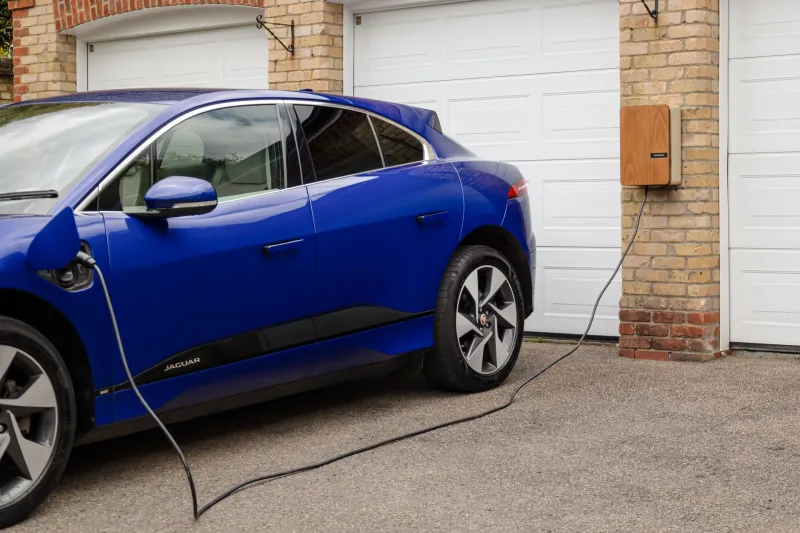
At home on a 7kW wallbox, the maths is gentler. If your car has a 60kWh usable pack, the last 20% is roughly 12kWh. Allowing for charging losses, that is a couple of hours on a typical home charger. Not a disaster if you are asleep. Much more irritating if you are parked at a motorway services and paying by the minute.
On a long journey, the sweet spot is usually to charge enough to reach the next stop comfortably, not to chase 100%. Public charging is priced for convenience, and the slow final top-up can turn a quick stop into a meal deal and a lap of the shop.
Three drivers, three sensible answers
The commuter
If you drive 25 miles each way and charge at home, you probably do not need 100% on a normal day. An 80% ceiling keeps the pack in a comfortable zone, leaves plenty of margin for detours, and means you are not paying to lug around energy you will not use. Plug in when you get home, set the limit, forget about it.
The weekend driver
The car sits on the drive from Monday to Friday and then does a 150-mile round trip to see family. Here, a full charge before the trip makes complete sense. Leaving it at 100% for two days afterwards does not. Use the timer or the app so the car finishes charging close to departure, not on Thursday evening.
The high-mileage owner
If you are doing 20,000 miles a year, charging strategy matters more because the pack is cycling more often. A daily 80% limit is a reasonable default, with a full charge only when the route demands it. But do not panic about the occasional 100%. A car that is used is a car that is working. The worst outcome is leaving it at a very low state of charge for weeks or baking it at 100% in a heatwave.
What the warranty actually says
Manufacturer warranties are not usually written as “thou shalt not charge to 100%”. They tend to cover the pack against excessive capacity loss over a set period or mileage, with a state-of-health threshold. The small print may recommend certain charging habits, but a full charge before a holiday is not going to void your cover.
What does matter is reading your own handbook. Some brands recommend a regular 100% charge for LFP cars. Others suggest a lower daily limit for NMC. The advice is not uniform, and guessing based on a YouTube comment is not a strategy.
A routine that does not ruin your day
For most UK drivers in 2026, a sensible routine looks like this: set an 80% or 90% daily limit if your car has an NMC pack, charge to 100% when you need the range, and do not leave it sitting full for days. If you have an LFP car, follow the manufacturer’s advice on regular full charges — often weekly — so the range display stays honest.
Use off-peak electricity where you can, but do not let cheap electrons tempt you into charging to 100% every night out of habit. And on public chargers, stop treating the final 20% as a challenge. It is usually the most expensive and slowest part of the session.
The 80% rule is a useful default, not a commandment. The best charging habit is the one that keeps the battery healthy without making you resent the car. For most people, that means a bit of thought, a timer, and the willingness to ignore the internet when it gets preachy.