Kerbside Kilowatts: Seven Charging Set-Ups That Work Without a Driveway
The standard advice given to would-be EV owners is that you need off-street parking. It is not true, exactly, but it is shorthand for something true: charging without a driveway takes more planning, more flexibility and occasionally a bit of diplomacy with your council. The good news is that the number of workable arrangements has grown a lot, and for many flat and terraced-house drivers one of the seven below turns out to be perfectly liveable.
First, the honest maths
Electricity from a home off-peak tariff can be well under 10p per kWh. Public slower chargers usually sit somewhere in the 40 to 60p range, while motorway rapids can be 75p or more. If your only option is rapids, the running-cost case for an EV gets noticeably thinner — so the aim here is to find something that is slow, local and cheap, and treat rapid charging as the exception rather than the routine.
1. The lamppost charger
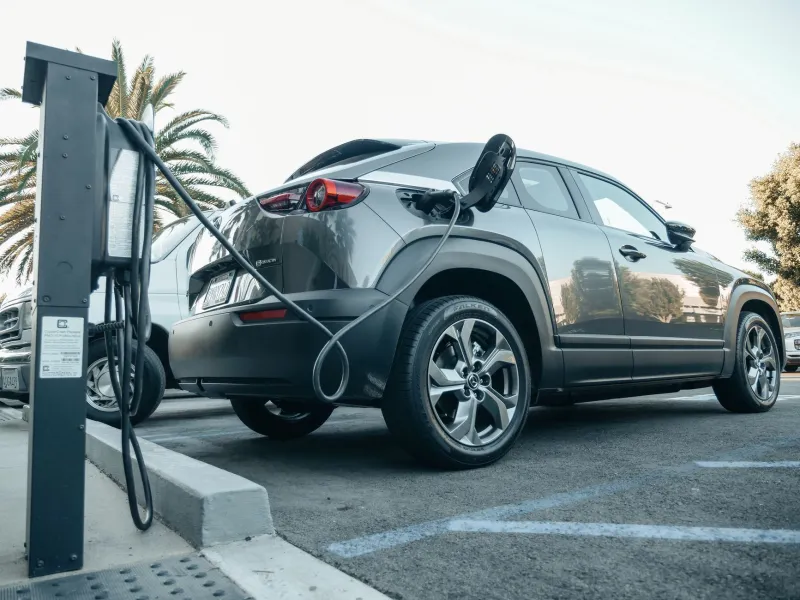
A number of councils have been fitting charge points into residential street lamps, usually with the socket in the base of the column. Where these exist they are a genuinely lovely solution: no cable across the pavement, no permit, often a modest per-kWh rate, and they use infrastructure that is already in the right place.
Availability is patchy and it is very much a postcode lottery. Check your council's website, or the map on Zapmap, before assuming anything. If your street does not have them, lobbying your ward councillor is not as futile an activity as it sounds.
2. An on-street permit or residential scheme
Some councils run permit-based schemes where a charge point is installed in a bay near your home, or where residents get a discounted rate on designated street chargers. Others have trialled gully and cable-channel installations that let you physically run a cable across the pavement safely.
Rules vary wildly and change often, so phone the council's highways or parking team rather than relying on a forum post from three years ago. Ask specifically about pavement crossing permission, because that is the bit that catches people out.
3. Cable across the pavement, done properly
Technically this is often tolerated rather than formally permitted, and doing it badly is both a trip hazard and a way to annoy your neighbours. Doing it well means a proper rubber cable ramp or mat, a high-visibility cable, charging overnight rather than during the day, and never leaving a loose loop of cable on the footway.
A surprising number of insurers will cover this provided you notify them and take reasonable precautions. Notification is the key word — a claim rejected because you never mentioned the cable is an expensive lesson.
4. Workplace charging as your main charger
If your employer has chargers — and plenty now do, often free or at a low rate — then a smallish daily commute can run almost entirely on workplace top-ups. Twenty kilowatts over a working day is comfortably 80 or more miles in most efficient cars.
This works best if you can be honest about your week. Hybrid working has quietly broken a lot of workplace-charging plans, because three days in the office is not the same as five. Ask about booking systems, whether the chargers are regularly ICEd, and whether the electricity is free or billed.
5. Community hubs and car parks
Libraries, leisure centres, park-and-ride sites and council car parks increasingly host slower, cheaper chargers. These suit people who can leave a car for two or three hours rather than needing a quick splash. Combine one weekly session with a supermarket top-up and a lot of low-mileage drivers never need anything faster.
The trick is treating it as a habit rather than an emergency. Charging while you swim on a Saturday morning is fine. Discovering at 9pm that you need 40 miles by dawn is not.
6. The rapid top-up habit
It works, and thousands of people do it, but be clear-eyed about what you are buying. Rapid charging is the most expensive way to run an EV, it is not brilliant for long-term battery health if it is your only method, and it ties your week to charger availability. If you have a short commute and a rapid within walking distance of home, it can be tolerable — I would just factor the cost in honestly rather than assuming it will be like home charging.
7. Borrowed, shared and improvised
There is a growing peer-to-peer market in private driveway charging, and some streets have informal arrangements where a neighbour with a drive rents out a socket overnight. There are also landlord conversations worth having — if you rent and your building has a car park, grants and legal rights around installing charge points have improved considerably in recent years, though the detail matters and it is worth checking the current rules on gov.uk rather than taking anyone's word for it.
A realistic week
Picture a terraced street in a mid-sized town: a Sunday evening session at a lamppost charger two doors down, a Wednesday top-up at the leisure centre while swimming, and a rapid only when a longer trip appears. Total cost for a typical 7,000-mile year lands far closer to home-charging figures than rapid-only ones, and the car is never actually inconvenient.
What I would do first
Check the charger map for your postcode. Ring the council and ask what schemes exist. Ask your employer about their chargers. Then look at your own week and work out how many times you would genuinely need to charge away from home. Most people who think they cannot run an EV without a driveway discover, once they map it out, that they can — they just need a routine rather than a plug outside the front door.