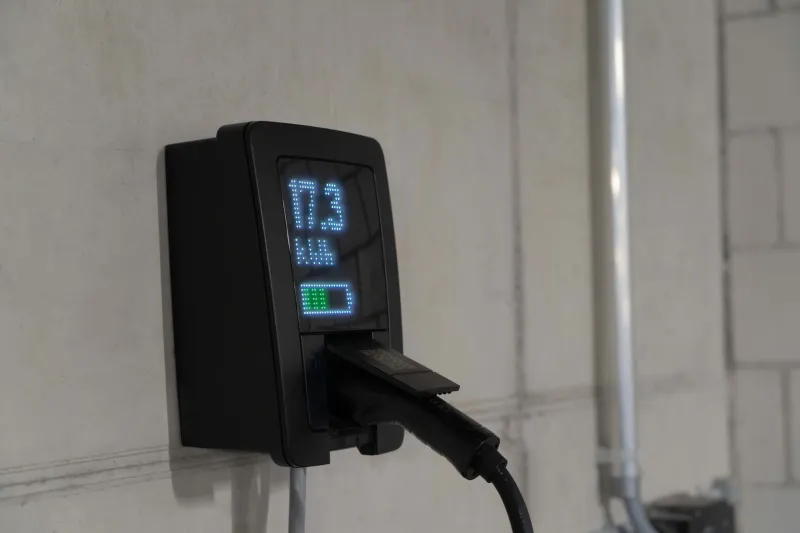
Charger on the Wall, Questions in the Survey: Seven Checks Before You Buy
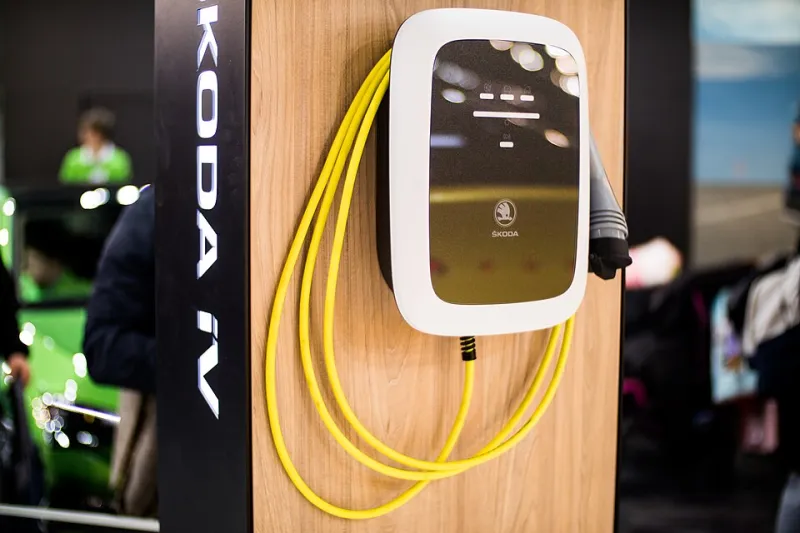
Photo: Ivan Radic, CC BY 2.0, via Wikimedia Commons
There is a lovely moment at a property viewing when you spot an EV charger on the wall of the garage. It feels like a bonus: no drilling, no electrician, no waiting for an installer. Unfortunately, a charger is not just a nice accessory. It is electrical equipment, sometimes a subscription, and occasionally a small pile of paperwork with your name about to be added to it.
None of this means you should run a mile. It just means you should look past the shiny box and ask a few sensible questions before exchange.
1. Ask for the installation certificate
A professionally installed charger should have an Electrical Installation Certificate or a minor works certificate, plus notification under Part P in England and Wales where required. Ask the seller for the paperwork. Check the date, the installer's details and whether the unit was registered with the local authority if that applied.
No paperwork is not automatically a deal-breaker, but it is a negotiating point. You may need an electrician to inspect and certify the installation before you rely on it. Budget for that.
2. Work out the app and back-office lock-in
Many smart chargers are tied to an app, an account and sometimes a monthly subscription. Ask who owns the account, whether it can be transferred, and what happens if the original installer has disappeared. Some units need a mobile signal or a cloud connection to run schedules and smart tariffs. If the app is useless without a paid plan, factor that into your running costs.
Also check whether the charger is tethered to one back-office provider. If you want to switch to a cheaper smart tariff later, you need to know whether the hardware will play nicely with it. A charger that only works with one company's ecosystem is less useful than a dumb but reliable box.
3. Inspect the cable and connector properly
Look at the charging cable for cuts, cracks, scorch marks and green crust around the pins. Check the connector for bent pins, damp and general wear. Pull the cable out of its holster and see how it hangs. A cable that has been driven over, yanked or left coiled in a puddle is telling you something.
If the charger is tethered, the cable is part of the unit. If it is untethered, you will bring your own cable, but the socket still needs to be sound. A quick test charge during a second viewing is worth arranging if the seller will allow it.
4. Check the electrical capacity, not just the box
A charger is only as good as the supply behind it. Ask an electrician to look at the consumer unit, the main fuse, the earthing arrangement and whether the charger has proper load management. An old fuse board with no spare ways may need upgrading. A supply that cannot cope with 7 kW may need a conversation with the distribution network operator.
This is not a DIY assessment. A qualified electrician should check the installation before you rely on it, and ideally before you exchange contracts. The cost of a survey is small compared with discovering that the charger has been sharing a circuit with the shed in a way that makes nobody happy.
5. Establish who owns the charger
Is the charger owned outright by the seller, leased, or part of a subscription package? If it is leased, can the agreement be transferred, and is there an outstanding balance? If the charger was supplied as part of a solar or energy package, there may be conditions attached.
Ask for the original invoice, warranty documents and any lease or hire agreement. If the seller cannot prove ownership, you need to know before you buy. The last thing you want is a finance company asking for its equipment back after you have moved in.
6. Check grant compliance and warranty terms
Government grant rules have changed over the years. Some installations were supported by schemes with conditions about keeping the chargepoint at the property or using an approved installer. The main homeowner grant scheme closed some time ago, but there are still grant routes for flats and renters, and older installations may have paperwork attached.
Check whether the charger was grant-funded and whether any conditions transfer. Also check the manufacturer's warranty. Some warranties are tied to the original purchaser or require an annual service. If the unit is out of warranty, you are taking on the repair risk.
7. Price up removal and replacement
If the charger is old, incompatible with your car, or simply not what you want, removal and replacement is not free. Removing a wallbox might cost £150 to £400, and a fresh installation can easily run £700 to £1,200 depending on cable runs and electrical work.
That does not mean you should demand a huge discount for an old unit. It does mean you should treat the charger as a modest bonus, not a headline feature. If it is a good unit with paperwork, great. If it is a mystery box with a cracked cable and no app access, price it as a liability.
The bottom line
A home charger can be a genuinely useful head start, especially if you are moving into a property with off-street parking and a sensible supply. But it is not a freebie until you have checked the certificate, the contract, the cable and the consumer unit. Ask the questions at viewing stage, get an electrician involved, and put anything unresolved into the negotiation. Your future self, standing in the rain with a charging cable, will thank you.